
On Call Electrical
Call Us Now! (623) 300-2728

Whole House Fan Installation Serving Glendale Homeowners

Glendale homes built on slab foundations from the fifties onward need a fan system sized for how those houses were framed and what they carry today.

Call Us Now or Request a Free Quote

(623) 300-2728

Whole House Fan Work That Fits Glendale Homes Right

Whole House Fan installation in Glendale starts with understanding the house itself. Most homes here went up between the mid-fifties and the early eighties, built on slab foundations with block and stucco construction. Contractors working through electrical contractors serving Glendale know that a slab-on-grade house leaves no basement or crawlspace to route wiring through, which changes what the job involves before a single screw turns. Pairing a new fan with professional attic fan installation helps maximize airflow in houses where the ceiling cavity is the only path air has to move.

In a Glendale home built on a slab, running new circuits for a whole house fan often means opening ceilings or running conduit along interior walls rather than dropping through a floor. Postponing the work does not make the house easier to wire; it means the panel keeps feeding a patchwork of older circuits that were never sized for a fan motor added alongside central air and a car charger. Homeowners who put off the job often find that the next addition pushes the panel past what it can handle, and expert electrical panel upgrade work becomes part of the conversation anyway.
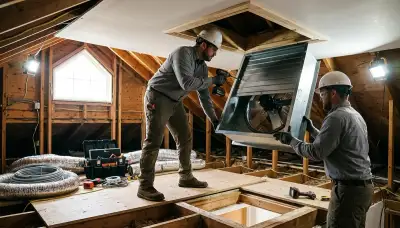
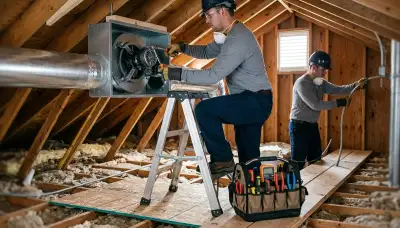
Whole house fan installation service for Glendale, AZ homes by On Call ElectricalWhole house fan installation service for Glendale, AZ homes by On Call Electrical

What type of electrical project is this?
  • TCPA Compliance
  • Comodo SSL Certificate
  • True Trust

Related Electrical Work Glendale Contractors Handle Around Whole House Fan

A whole house fan rarely arrives alone. Local contractors often address the circuits, outlets, and connected systems that the fan depends on or that share the same panel.

Attic Ventilation and Airflow Support

A whole house fan pulls air through the house and pushes it into the attic. In block-and-stucco homes built through the seventies, attic venting was often undersized for the volume a fan moves. Contractors assess whether the existing attic openings can handle the added pressure before the fan goes in.

Get Attic Ventilation Help

Panel Capacity for the Added Fan Circuit

Adding a whole house fan circuit to a panel that was sized in the sixties or seventies for a much smaller load is where jobs stall. Reliable electrical panel installation brings the breaker box up to what the house actually carries before the fan is connected, so the new circuit has room and the rest of the panel is not pushed past its limit.

Get Panel Work Scheduled

Outlet and Circuit Condition Near the Fan Switch

The switch and control wiring for a whole house fan run back to outlets and junction points that, in houses built before the mid-seventies, may not have been updated since original construction. Outlets warm to the touch or lights that dim when the fan kicks on are signs that the circuit feeding the switch needs attention before the fan runs regularly.

Check Outlet Condition Now

Outdoor and Garage Circuits That Age Separately

Detached garages and outdoor runs on Glendale homes built through the eighties were often wired on separate feeds that aged differently from the house circuits. When a whole house fan is added, quality electrical wiring work on those outdoor runs keeps the garage and yard circuits from becoming the weak point in a panel that is otherwise ready for the fan.

Get Outdoor Wiring Reviewed

On Call Electrical
Request a Free QuoteCall now(623) 300-2728

How Seasonal Load Shifts Affect Whole House Fan Demand in Glendale

The same house carries different demands through the year, and what it reveals about the panel and circuits changes with each season.

Spring Whole House Fan Prep Across Glendale, AZ

Spring is the right window to install a whole house fan or add the circuit it needs before cooling demand climbs. Pool circuits, outdoor runs, and the panel itself can all be addressed while the house is not yet running at full load. A slab-on-grade home built in the sixties does not get easier to wire as more is added to it.

Schedule Spring Whole House Fan

Summer Fan Load on Glendale, AZ Homes

A panel sized in 1962 running central air through a long summer is already carrying more than it was built for. Add a whole house fan drawing its own circuit and the margin disappears fast. Specialist home energy audit services can identify where the panel is losing headroom before the fan makes the problem visible as a tripped breaker.

Schedule Summer Whole House Fan

Fall Fan System Review Around Glendale, AZ

Fall is when the house hands off from months of cooling to the first heating loads, and what summer exposed in the panel is still there. A whole house fan that ran hard through summer may have surfaced loose connections or a circuit that ran warm. Fixing those before heating and holiday loads arrive keeps the panel from carrying two problems at once.

Schedule Fall Whole House Fan

Winter Electrical Load on Glendale, AZ Houses

Heating, space heaters, and holiday lighting stacked onto circuits that were never meant to carry them all at once put the same pressure on a panel that summer cooling does, just from a different direction. A whole house fan circuit that shares a panel with all of that needs to be on a breaker sized for the actual load, not the load the house carried when it was built.

Schedule Winter Whole House Fan
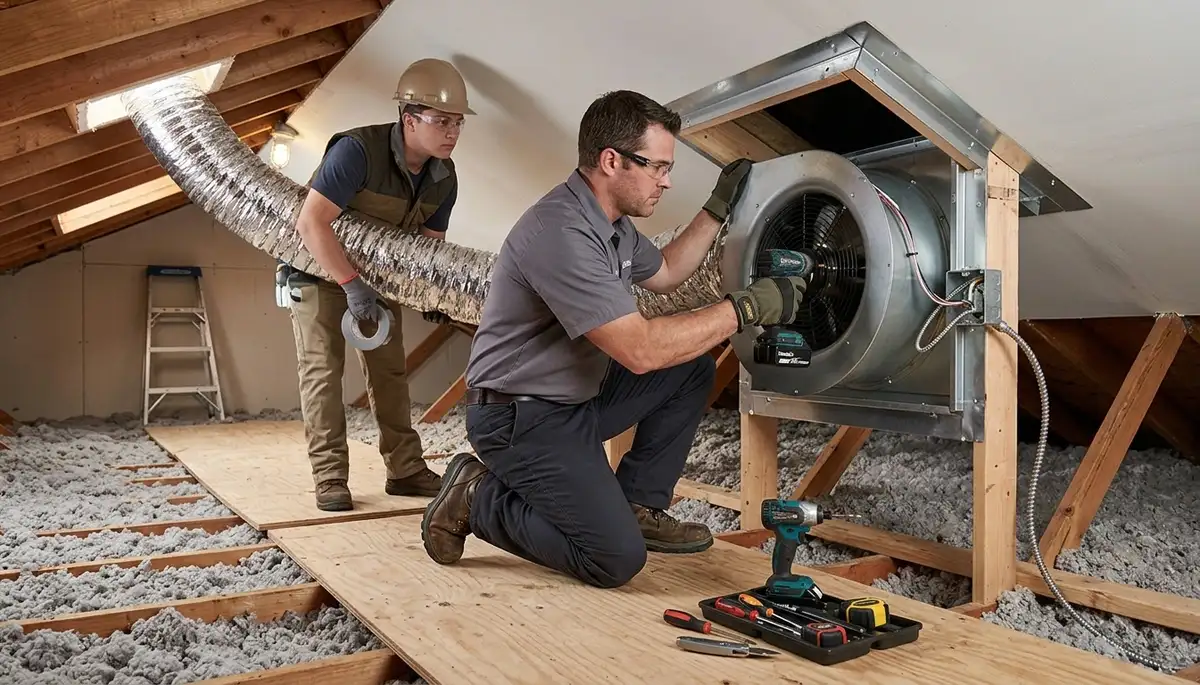
Whole house fan installation service for Glendale, AZ homes by On Call Electrical

Glendale Homeowners Finding Electrical Contractors Through On Call

Electrical Contractor Coverage Across Glendale, AZ

On Call Electrical connects homeowners across the Greater Glendale area with local electrical contractors ready to help. From the growing residential streets of Peoria to the outlying properties on larger lots in Avondale, coverage holds wherever the home sits in the area.

Homes throughout Glendale and the surrounding communities are within reach. Sun City, with its established neighborhoods, is part of the same network serving homeowners wherever they live.

Electrical Contractor Coverage, Zip Codes and Service Areas Near Glendale

Find your neighborhood in the zip code list below and see where On Call Electrical answers residential electrical repair calls across Glendale and the surrounding communities.

  • Glendale, AZ (85301)
  • West Glendale, AZ (85302)
  • North Glendale, AZ (85303)
  • Arrowhead Ranch, AZ (85308)
  • Peoria, AZ (85345)
  • North Peoria, AZ (85382)
  • Phoenix, AZ (85019)
  • Northwest Phoenix, AZ (85027)
  • Sun City, AZ (85351)
  • Sun City West, AZ (85375)
  • El Mirage, AZ (85335)
  • Youngtown, AZ (85363)
  • Avondale, AZ (85323)
  • Litchfield Park, AZ (85340)
  • Tolleson, AZ (85353)
  • Surprise, AZ (85374)
  • Goodyear, AZ (85338)
  • Buckeye, AZ (85326)
  • Anthem, AZ (85086)
  • Deer Valley, AZ (85051)
  • Maryvale, AZ (85031)
  • Luke Air Force Base Area, AZ (85309)
  • Waddell, AZ (85355)
  • Laveen, AZ (85339)

Reach a dependable local professional and have your project handled right.

  • Complimentary Quotes
  • Verified Pros
  • Prompt Replies

Electrical Contractor Questions Answered for Glendale, AZ

Electrical contractor work in Glendale, AZ covers homes built across several decades of block-and-stucco construction on slab foundations. These plain answers cover urgent symptoms, what jobs actually involve, capacity for modern loads, and how to find someone local fast.

  • A warm outlet or dimming lights on the same circuit in a Glendale home are signs of heat building at a connection, and that does not wait until morning. Turn off anything plugged into that outlet and do not use it again until a contractor looks at it. Local contractors serving Glendale offer around-the-clock emergency response, so calling tonight is the right move.

  • In a Glendale slab home, there is no basement or crawlspace to route wire through, so the contractor runs new circuits through the attic, down interior walls, or through conduit along exterior block walls. Diagnosis and load assessment come first, then the physical run, then permit and inspection before the circuit goes live. A straightforward single-circuit add typically takes one to two days once the permit is in hand.

  • Heat at connections is the angle that demands urgency across Glendale homes built in the late sixties and early seventies, when aluminum branch wiring was common. An outlet warm to the touch, a burning smell near a switch, or lights that dim sharply when an appliance starts all signal heat risk. A dead outlet with no smell is usually inconvenient but not an emergency.

  • On Call Electrical connects Glendale homeowners with local contractors rather than doing the work itself. A homeowner submits the job details, receives quotes from multiple contractors in the area, and compares them side by side. Comparing quotes on scope, not just on price, shows whether each contractor is pricing the same work, which is the detail that matters most before choosing.

  • A dedicated 240-volt circuit for a car charger pulls real load, and the service panel in many Glendale homes built before the nineties was sized long before that demand existed. The contractor checks available amperage, counts remaining breaker slots, and assesses whether the panel can carry the addition. If the service is already at capacity, a panel upgrade comes before the charger, not after.

  • Service amperage is the total amount of power the utility feeds into the house, and it is stamped on the main breaker inside the panel. In a Glendale home, the panel is typically mounted in the garage or on an exterior wall. A 100-amp main breaker means the house was sized for a much lighter load than most homes carry today; 200 amps is the current standard for a fully loaded household.

  • Homes built across Glendale during the late sixties and early seventies frequently used aluminum branch wiring, installed when copper prices spiked. Aluminum expands and contracts more than copper at connections, which loosens them over time and creates heat. A home energy audit or electrical inspection will confirm what is in the walls and whether the connections have been treated or upgraded.

  • Panel upgrade pricing around Glendale shifts based on the existing service size, how many circuits feed through the current panel, and whether the exterior wall mount requires conduit rerouting. In a block-and-stucco slab home, adding circuits during the same job changes the total because every run through block or attic takes more time than a framed wall. Comparing quotes on what each scope actually includes matters far more than comparing the bottom-line number alone.