
Homes across Litchfield Park were built mostly from the mid-1970s through the early 2000s on slab-on-grade lots, with panels in the garage and no basement below to thread new circuits through. The electrical contractors in Glendale network reaches these houses knowing that a new circuit here means opening walls, not pulling wire through a crawlspace, and that professional electrical panel upgrade work is often the first call a homeowner makes when the original service can no longer keep up.
What these homes were built with and what has been added to them since is exactly why homeowners in Litchfield Park reach for a local electrician rather than a general handyman.
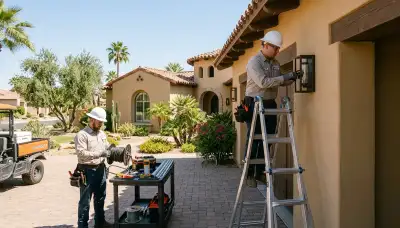
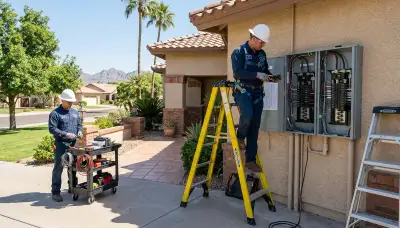
Knowing Litchfield Park Homes Changes What Gets Done Right
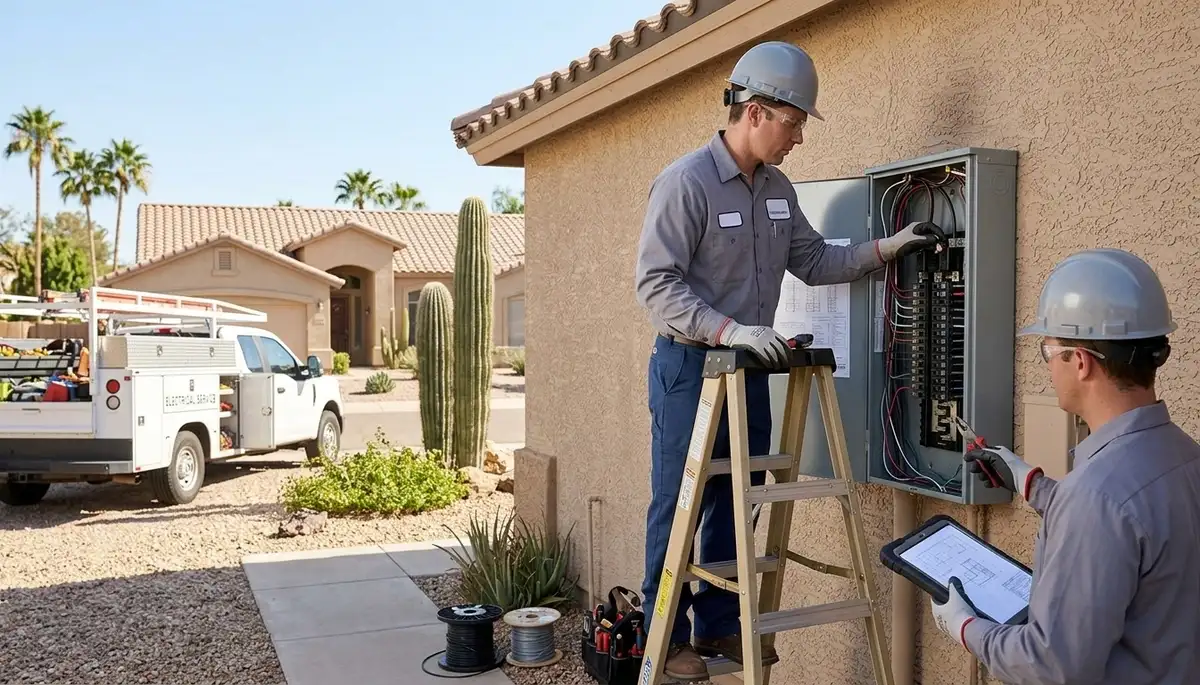
A local electrician working in Litchfield Park knows these houses sit on slab, that the panel is almost always in the garage, and that the original service was sized before electric vehicle chargers, large air conditioning units, and pool equipment became standard additions.
Two kinds of work come up again and again in these homes: panels that have no room left for new breakers and outdoor runs to pool equipment or detached garages that have aged past their original rating. Homeowners in Avondale, AZ electrical services territory face similar slab-construction challenges, and the same approach applies here.
If something in the panel feels off or an outlet has stopped working, getting it looked at now keeps a small problem from becoming a costly one.
Electrical Work Matched to How Litchfield Park Homes Are Built
An off-the-shelf approach fails in these homes because slab construction leaves no underfloor path for new wiring, which means every added circuit requires planning around walls, attic space, and the garage panel location.
Detached homes on larger lots carry long outdoor runs to workshops or pool equipment, while attached homes on tighter lots share utility corridors that limit where conduit can travel. Expert ceiling fan installation in a slab home, for example, means working through the attic rather than below the floor.
Four services that fit the way these homes are built: quality generator installation for homes that rely on a single panel with no backup, reliable landscape lighting for long outdoor runs across larger lots, specialist GFCI circuit work for kitchens and bathrooms that were wired before those protections were standard, and professional electric car charger installation for garages where the panel sits but the service was never sized for that load.
When Litchfield Park Homes Were Built Still Shapes What They Need
Most of the homes here went up from the mid-1970s through the early 2000s. Houses built in that stretch came with panels sized at 100 to 150 amps, two-wire circuits in older rooms, and outdoor wiring that was adequate for a yard light and a small pump but not for what sits on those lots today. Three things follow from that and still drive most of the electrical work in Litchfield Park: undersized service capacity, too few circuits for how rooms are used now, and outdoor infrastructure that has aged past its original design life.
The Panel Has No Room Left
When every slot in the breaker box is taken and a homeowner needs another circuit for a charger or an appliance, the panel itself becomes the problem. Double-tapped breakers are a common workaround that creates heat at the connection and raises the risk of a tripped breaker not protecting the circuit it is supposed to protect.
Local electricians replace or expand the panel so each circuit has its own breaker and the box has room to grow. Homeowners in Peoria, AZ residential electricians territory encounter the same full-panel situation, and the fix is the same: a proper upgrade, not a workaround.
Outlets Warm to the Touch
An outlet that feels warm, or lights that dim when a second appliance starts on the same circuit, point to wiring that is carrying more than it was designed for. In homes built through the 1970s and early 1980s, aluminum branch wiring was sometimes used, and aluminum connections loosen over time in ways that copper connections do not, producing heat at the point where the wire meets the device.
Local electricians identify which circuits carry aluminum wiring and apply the correct connectors and devices rated for it, eliminating the heat at the connection and restoring safe operation throughout those circuits.
Too Few Circuits for the Kitchen
A kitchen or bathroom that trips a breaker every time two appliances run at once was wired when far fewer things plugged in at the same time. The circuit count was set for a house with one toaster and a coffee maker, not a microwave, an air fryer, and a refrigerator on the same run.
Adding dedicated circuits to the kitchen or bathroom resolves the tripping and removes the extension cords that homeowners run as a workaround, which improves both convenience and safety in the rooms that need it most.
The Service Was Never Sized for What Was Added
A pool pump, a two-ton air conditioning unit, and an electric vehicle charger were not part of the load picture when most of these homes were built. Each one draws steadily, and a house that runs all three on a 100-amp service is pushing the panel harder than it was designed to handle, particularly on the hottest days when the air conditioning runs longest.
Local electricians calculate the actual load and upgrade the service entrance to match it, so the homeowner can run the charger, the pool pump, and the air conditioning at the same time without worrying about the panel or the meter.
Slab Construction Limits Where New Wiring Can Go
With no basement or crawlspace below the floor, every new circuit in a Litchfield Park home has to travel through the attic or inside the walls. That makes the path from the panel to the destination longer and more involved than it would be in a house with underfloor access.
Local electricians plan the route through the attic before opening anything, using the garage panel location as the starting point and fishing wire through interior walls only where the attic path cannot reach, keeping the work contained and the disruption to finished surfaces minimal.
Call (623) 300-2728 to arrange a no-pressure visit with a local electrician who can look at what the panel is carrying and tell the homeowner exactly what it needs before a small issue becomes a larger repair.
On Call Electrical brings reliable, thorough work to every Litchfield Park home it serves.

Full Electrical Services Available in Litchfield Park, AZ
The work listed below covers what homeowners in Litchfield Park most often need. Find what fits the situation and reach out to get it scheduled.
Urgent Electrical Repairs in Litchfield Park, AZ
- Electrical Repair - A breaker that will not reset or an outlet that stopped working needs attention before it spreads to other circuits.
- Outlet Repair - Outlets that spark, feel warm, or have stopped holding a plug are a sign the connection behind the wall has failed.
- Switch Repair - A switch that buzzes, flickers, or no longer controls the fixture it is wired to is a connection problem, not just an inconvenience.
- Ceiling Fan Repair - A fan that wobbles, hums, or runs at only one speed has a wiring or motor connection issue that gets worse with time.
- GFCI Circuits - Kitchens and bathrooms that lack the outlets with test and reset buttons are missing a protection that current homes require near water.
If any of these match what the homeowner is seeing, a local electrician can diagnose and correct it in a single visit.
Panel, Service, and Wiring Work in Litchfield Park, AZ
- Electrical Panel Upgrade - A panel with no open slots or one that predates the loads now running through it needs to be sized for what the house actually carries.
- Electrical Panel Installation - Replacing a fuse box or a panel that has reached the end of its service life with a modern breaker box that has room to grow.
- Electrical Wiring - Homes wired before grounding was required, or with aluminum branch circuits, need the wiring assessed and corrected at the connections.
- Electrical Service - The service entrance from the meter to the panel is the starting point for every circuit in the house and needs to match the total load.
- New Construction Wiring - Additions and converted spaces need wiring run from scratch, which in a slab home means routing through the attic and walls.
These are the jobs that change what the house can safely carry and what the homeowner can add to it without overloading what is already there.
Safety and Protection Services in Litchfield Park, AZ
- Smoke Detector Installation - Detectors placed at the right locations and wired into the home's power give the homeowner reliable warning without dead batteries.
- Whole Home Surge Protection - A single surge from outside the house can reach every circuit at once; a whole-home device stops it at the panel before it travels.
- Lightning Surge Protection - A direct or nearby strike sends a spike through the service entrance that unprotected electronics and appliances cannot survive.
- Home Electrical Inspections - An inspection of the panel, the grounding, and the visible wiring tells the homeowner what is safe, what is aging, and what needs attention.
- Fire Alarm Installation - A wired alarm system covers the whole house from a single panel rather than relying on individual battery-powered units in each room.
Each of these protections addresses a risk that is easier and less expensive to prevent than to recover from. A local electrician can assess which ones are already in place and which ones are missing, and the homeowner can decide what to add based on what the house actually has.
Lighting, Outdoor, and Added-Load Work in Litchfield Park, AZ
- Landscape Lighting - Long outdoor runs to yard and path lighting need wiring that is rated for direct burial and connected at a circuit sized for the total fixture count.
- Pool Pumps - A pool pump draws a steady load and needs a dedicated circuit that was sized for it from the start, not borrowed from an existing run.
- Electric Car Charger Installation - A Level 2 charger requires a dedicated 240-volt circuit from a panel that has the capacity to add one without overloading the service.
- Security Lights - Motion-activated lights at entry points and along the perimeter need weatherproof wiring and a circuit that does not share a run with interior loads.
- Recessed Lighting Installation - Adding recessed fixtures to a slab home means routing new wiring through the attic and cutting into the ceiling at each fixture location.
These are the loads that Litchfield Park homes are being asked to carry now, and getting the wiring right from the start means the homeowner does not have to revisit the same circuit a few years later.