
The network of electrical contractors in Glendale that serves Phoenix reaches homes where a panel with no empty slots, two-prong outlets in every room, and a breaker that will not reset are everyday problems. These houses need someone who knows what was installed and what it can no longer handle, including expert electrical panel upgrade work that matches the load these homes are running now.
Phoenix homeowners call a local electrician because someone who works these houses every week knows where the problems hide and what the fix actually involves.
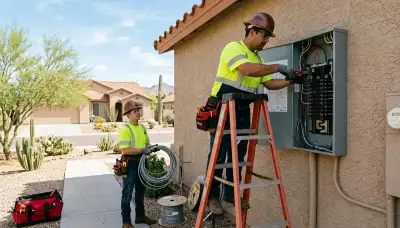
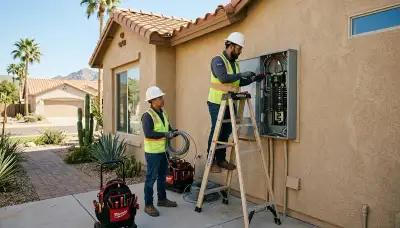
Knowing Phoenix Homes Changes What the Work Involves
A local electrician working across Phoenix knows that most of the houses here went up in the fifties and sixties on slab foundations, with panels mounted in garages or on exterior walls and wiring that was never sized for central air conditioning or a second refrigerator.
Slab construction means there is no basement to run new circuits through, so adding a circuit often means opening walls or pulling wire through the attic. Homeowners near electrical contractor in Avondale, AZ deal with similar constraints in comparable houses built the same way.
Get the problem looked at before a tripped breaker or a warm outlet becomes something worse.
Electrical Work Matched to How Phoenix Homes Are Built
An off-the-shelf approach fails in houses built on slab with panels on exterior walls, because every new circuit run is a decision about how to reach it without tearing out finished rooms or running exposed conduit across living spaces.
Some Phoenix homes are single-story block-and-stucco with tight attic access; others are detached with a separate garage or workshop on a long outdoor run. Each one changes the job, and reliable outlet repair in a slab house is a different task than the same job in a home with a crawlspace.
Four services fit these houses directly: professional ceiling fan installation for homes that rely on air movement through every room, quality recessed lighting installation where attic access makes it possible without opening ceilings, specialist GFCI circuit work for kitchens and bathrooms that were wired before those protections existed, and expert smoke detector installation in homes where detection was never built in.
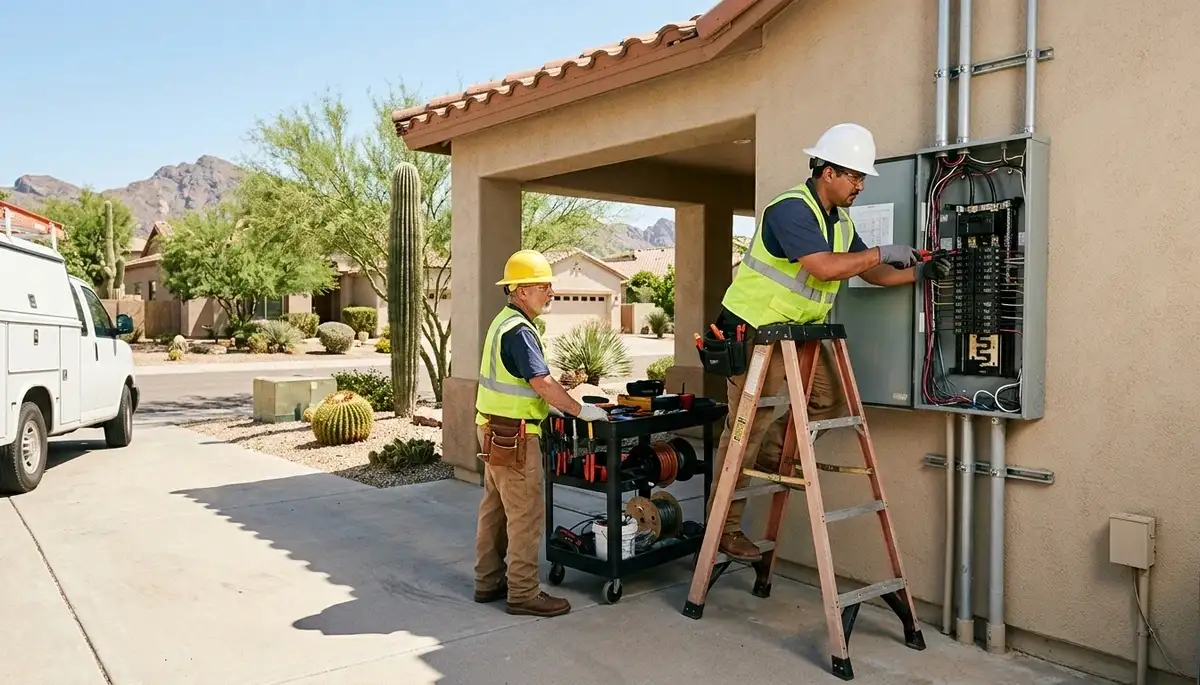
What the Age of Phoenix Homes Still Decides Today
Most houses across Phoenix went up in the fifties and sixties, a period when a sixty-amp panel was standard, aluminum wiring appeared in some homes built in the late sixties and early seventies, and grounding was not yet required. Three things follow from that: panels are often full with no room for a new circuit, outlets in older rooms may be two-prong with no ground, and connections made in aluminum can loosen and run hot over decades of use.
The Panel That Has No Room Left
A homeowner notices it when every slot in the breaker box is taken and an electrician has to double up breakers just to add a circuit. Behind it is a panel sized for a house with one window unit and a handful of appliances. Left alone, a full panel means extension cords become permanent wiring and the risk of an overloaded circuit grows with every device added.
Local electricians replace the panel or add a subpanel to give the house the capacity it is actually running. The work is matched to what the house needs now, not what it was built for then. Homeowners in Peoria, AZ electrical services face the same panel constraints in houses of the same age.
Outlets That Are Warm to the Touch
An outlet that feels warm, or a light that dims on one circuit when something else turns on, points to aluminum wiring that has worked loose at the connection point over the years. The loosened connection builds resistance, resistance builds heat, and heat at a connection inside a wall is a fire risk that does not announce itself.
Electricians correct it by replacing the connections with rated devices or re-terminating at every point where aluminum meets a fixture or outlet. After the work, the outlet is cool and the circuit carries its load without flickering.
Two-Prong Outlets Through the House
Years of use have not changed what two-prong outlets can do: they carry power but offer no ground path, which means a surge has nowhere to go and a modern appliance with a three-prong plug needs an adapter. In a house built before grounding was required, every room may have them.
Adding grounded outlets or installing the outlets with test and reset buttons where code allows gives the homeowner a safer connection and removes the need for adapters throughout the house.
A Service That Was Never Sized for What Was Added
A pool pump, an electric car charger, or a new air conditioning unit each draws more than a sixty-amp service was ever sized to deliver. On a hot afternoon with the air running and the pump cycling, the panel is carrying a load it was not built for, and that gap only grows as more is added to the house.
Electricians upgrade the service to match what the house is actually running, then confirm the panel and wiring downstream can carry it. After the upgrade, a homeowner can run the charger, the pool equipment, and the air conditioning without watching the breaker box.
Slab Construction and the Work It Complicates
With no basement and no crawlspace beneath the floor, running a new circuit from one end of the house to the other means finding a path through the attic or opening a wall. Tight attic access in a low-pitch roof makes some runs a half-day job and others a full one.
Local electricians plan the route before the work starts, use existing pathways where they exist, and patch what is opened so the finished room looks the way it did before. The work gets done without turning a circuit addition into a renovation.
Call (623) 300-2728 to arrange a no-pressure visit from a local electrician who will look at what the house actually has and tell the homeowner what it needs.
On Call Electrical handles the work so it holds, job after job across Phoenix.

Electrical Services Available Across Phoenix, AZ
The work below covers what homes in Phoenix, AZ most often need. Find the situation that matches and reach out to get it handled.
Urgent Electrical Work for Phoenix, AZ Homes
- Electrical Repair - A breaker that will not reset or an outlet that stopped working in a house where the wiring is decades old needs attention before the problem spreads.
- Outlet Repair - An outlet warm to the touch or one that sparks when a plug is inserted is a sign the connection behind it has failed.
- Switch Repair - A switch that buzzes, feels warm, or no longer controls the fixture it was wired to is a repair that should not wait.
- GFCI Circuits - Kitchens and bathrooms in homes built before the seventies often have no protection at all; adding it removes a risk the homeowner cannot see.
- Electrical Panel Upgrade - A panel with no empty slots and breakers that trip under normal use is telling the homeowner it has reached its limit.
If any of these match what is happening in the house right now, a local electrician can look at it the same day.
Capacity and Wiring Work for Phoenix, AZ Homes
- Electrical Panel Installation - Houses that still have the original panel from the fifties or sixties are running equipment on a box that was never sized for it.
- Electrical Service - The service entrance bringing power into a home built for sixty amps cannot safely carry what a modern household runs.
- Electrical Wiring - Wiring installed before aluminum was known to be a problem, or before grounding was required, may need to be replaced or re-terminated throughout.
- New Construction Wiring - Additions and converted garages in Phoenix homes need wiring that matches what the rest of the house is carrying.
- Home Electrical Inspections - A full inspection tells the homeowner exactly what the panel, the wiring, and the outlets can and cannot do before something fails.
These upgrades bring the house in line with what it is being asked to carry every day.
Safety and Protection Work for Phoenix, AZ Homes
- Smoke Detector Installation - Homes built before detection was required may have no hardwired detectors at all, or detectors that have never been replaced.
- Fire Alarm Installation - A connected alarm system gives a home with aging wiring an early warning that a standalone detector cannot match.
- Whole Home Surge Protection - A single surge can reach every outlet in the house through the panel; protection at the panel stops it before it travels.
- Lightning Surge Protection - Homes on open lots with long service runs are exposed when a strike hits the line feeding the house.
- GFC Outlets - Replacing two-prong outlets with grounded or protected devices removes the risk a homeowner lives with every time a three-prong plug needs an adapter.
These are the repairs and installations that change what can happen inside a house where the wiring is old and the loads are new. A local electrician can walk through the home, identify what is missing, and handle it in a single visit so the homeowner is not left wondering what the house still needs.
Lighting, Outdoor, and Added-Load Work for Phoenix, AZ Homes
- Electric Car Charger Installation - A dedicated circuit sized for a charger keeps the panel from carrying a load it was never wired for.
- Pool Pumps - A pool pump running on a circuit shared with other equipment trips breakers and shortens the life of the pump.
- Landscape Lighting - Outdoor runs on a Phoenix home age differently from interior wiring and often need new connections or a dedicated circuit.
- Security Lights - Motion-activated lights on a detached garage or along a long driveway need a circuit that reaches them without overloading what is already out there.
- Generator Installation - A standby generator tied to the panel keeps the house running when the grid goes down, without the risk of back-feeding through an unprotected connection.
These are the loads Phoenix homes are being asked to carry now, and the work that makes sure the house can carry them without the panel becoming the problem.